
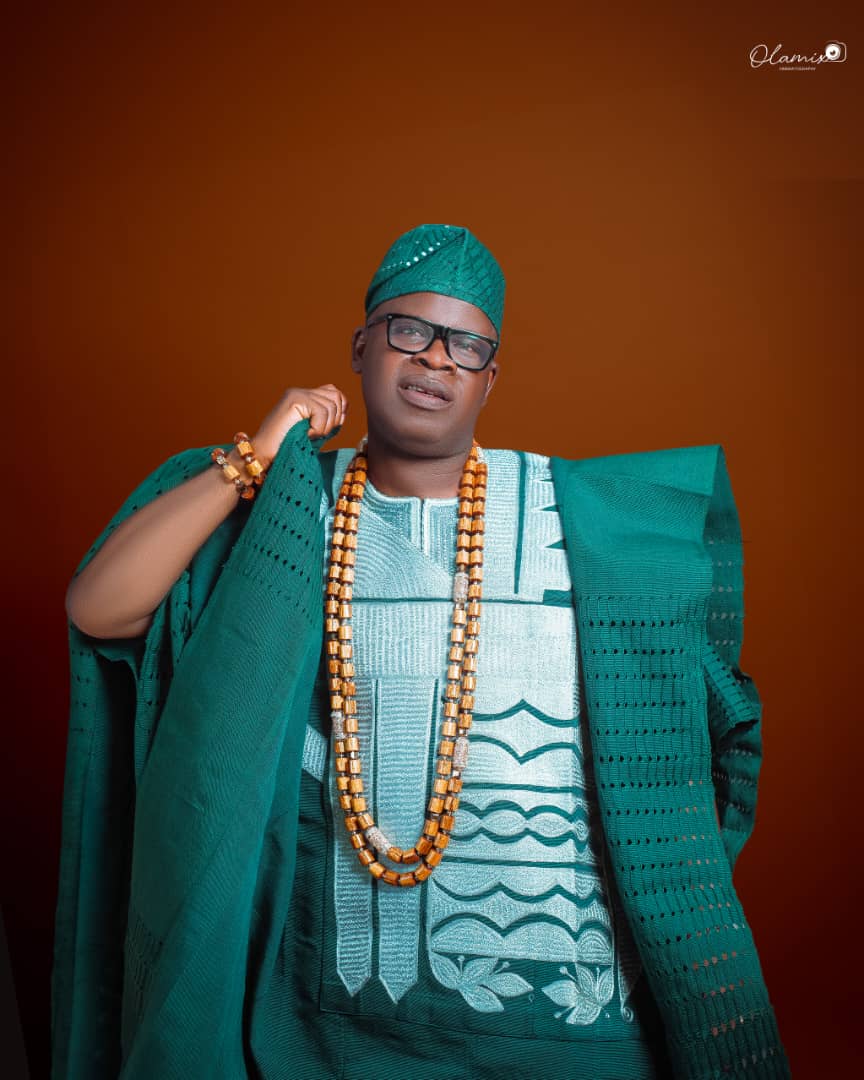
Leadership is often measured by visibility rather than value and Chief (Engr.) Jubril Dotun Sanusi represents the compelling norm.





















His approach is not anchored in lofty speeches or public spectacle, but in deliberate, sustained action that produces measurable impact.
At the heart of his philosophy lies a simple yet powerful conviction: true leadership is defined by the opportunities it creates for others.
Across Nigeria, conversations about youth empowerment frequently centre on policy promises and institutional frameworks.




Yet, Sanusi has chosen a different route, one that bypasses rhetoric in favour of practical intervention.
By strategically investing in sports and hospitality, he has built platforms that do more than generate revenue; they cultivate potential, nurture talent, and unlock pathways that many young Nigerians would otherwise never access.
Nowhere is this vision more vividly realised than in Ilaji Hotels and Sports Resort, located in Akanran, Ibadan.
What might appear at first glance to be a luxury destination reveals itself, upon closer inspection, as a dynamic ecosystem of growth and development.
It is a place where ambition meets opportunity, where raw talent is refined, and where young people are equipped with the skills required to compete in an increasingly globalised world.
The resort stands as a testament to the idea that infrastructure alone does not drive development — people do. Within its operations, Sanusi has embedded a culture of continuous learning and professional excellence.
Employees are not merely staff; they are participants in a broader vision of capacity building. Through structured training programmes, mentorship initiatives, and exposure to international standards, individuals are empowered to rise beyond their immediate circumstances.
A striking example of this commitment is the recent international capacity-building tour undertaken by over twenty management staff.
Spanning multiple countries across Europe and Africa, the initiative offered participants a rare opportunity to engage with global best practices in hospitality and tourism.
From operational efficiency to customer experience, the knowledge gained during these visits is being translated into tangible improvements back home.
What distinguishes this effort is not just its scale, but its intention. By fully funding the programme, Sanusi removed the financial barriers that often limit access to such exposure.
More importantly, he signalled a deeper belief: that investing in people is the most sustainable form of development.
Skills acquired today become the foundation for innovation tomorrow, creating a ripple effect that extends far beyond individual beneficiaries.
This philosophy extends seamlessly into the realm of sports, where Sanusi has also made significant inroads. For many young Nigerians, athletic talent represents both passion and possibility.
However, the absence of structured pathways often stifles potential before it can fully emerge. Recognising this gap, Sanusi has established and supported football clubs that serve as launchpads for aspiring athletes.
These clubs are not merely recreational outlets; they are structured environments designed to nurture discipline, teamwork, and professional growth.
By providing access to training, mentorship, and competitive exposure, they offer young players a realistic shot at building careers in sports.
The inclusion of international affiliations further amplifies this impact, connecting local talent to global opportunities.
Yet, beyond the tangible outcomes lies a more subtle, but equally powerful, dimension of Sanusi’s work. His leadership style is characterised by restraint.
Achievements are not broadcast with fanfare, nor are contributions framed as acts of charity. Instead, there is a consistent emphasis on dignity, ensuring that beneficiaries are seen not as recipients of aid, but as active participants in their own advancement.
This approach challenges conventional narratives around influence and recognition. In a culture that often equates visibility with impact, Sanusi’s model demonstrates that the most meaningful change frequently occurs away from the spotlight.
By prioritising substance over spectacle, he shifts the focus from individual acclaim to collective progress.
Equally noteworthy is the way his ventures bridge the gap between private enterprise and public good.
In many developing economies, the relationship between these sectors is often viewed through a lens of tension or competition.
Sanusi, however, illustrates how they can function in harmony. His investments generate economic activity, create employment, and enhance local communities, all while aligning with broader development objectives.
For the city of Ibadan and its surrounding areas, the effects are both immediate and far-reaching. Jobs are created, businesses are stimulated, and young people are engaged in productive pursuits.
This, in turn, contributes to social stability and economic resilience, outcomes that extend well beyond the confines of any single project.
At its core, Sanusi’s work embodies a forward-looking vision. It is not driven by short-term gains, but by a commitment to generational impact.
By equipping young people with skills, exposure, and confidence, he is effectively investing in the architects of Nigeria’s future.
Each trained professional, each empowered athlete, represents a step towards a more capable and self-sustaining society.
There is also an important lesson here about the nature of leadership itself. In a world increasingly defined by immediacy and attention, patience can often be undervalued.
Yet, Sanusi’s journey underscores the importance of consistency. Real change, it suggests, is not the result of isolated efforts, but of sustained commitment over time.
His model invites a broader reflection on what it means to lead effectively in the modern context. Is leadership about commanding attention, or about creating impact?
Is it measured by personal recognition, or by the success of those one empowers? Through his actions, Sanusi offers clear answers, not through words, but through example.
Ultimately, the significance of his work lies not just in what has been achieved, but in what it represents. It is a blueprint for development that is both practical and replicable.
By integrating sports, hospitality, and human capacity building, he has demonstrated that meaningful progress does not require extraordinary resources — it requires clarity of purpose and the willingness to act.
As Nigeria continues to grapple with the challenges of youth unemployment and economic diversification, models like Sanusi’s become increasingly relevant.
They provide not only inspiration, but a tangible framework for action. They show that with the right approach, it is possible to transform potential into productivity, and ambition into achievement.
In the final analysis, Chief Jubril Dotun Sanusi’s legacy is being shaped not by the noise around him, but by the lives he touches.
It is written in the confidence of a young professional stepping into a global arena, in the determination of an athlete pursuing a dream, and in the quiet assurance that opportunity, once created, has the power to change everything.
And perhaps that is the most enduring lesson of all: that true leadership is not about standing above others, but about lifting them, steadily, deliberately, and without expectation of applause.