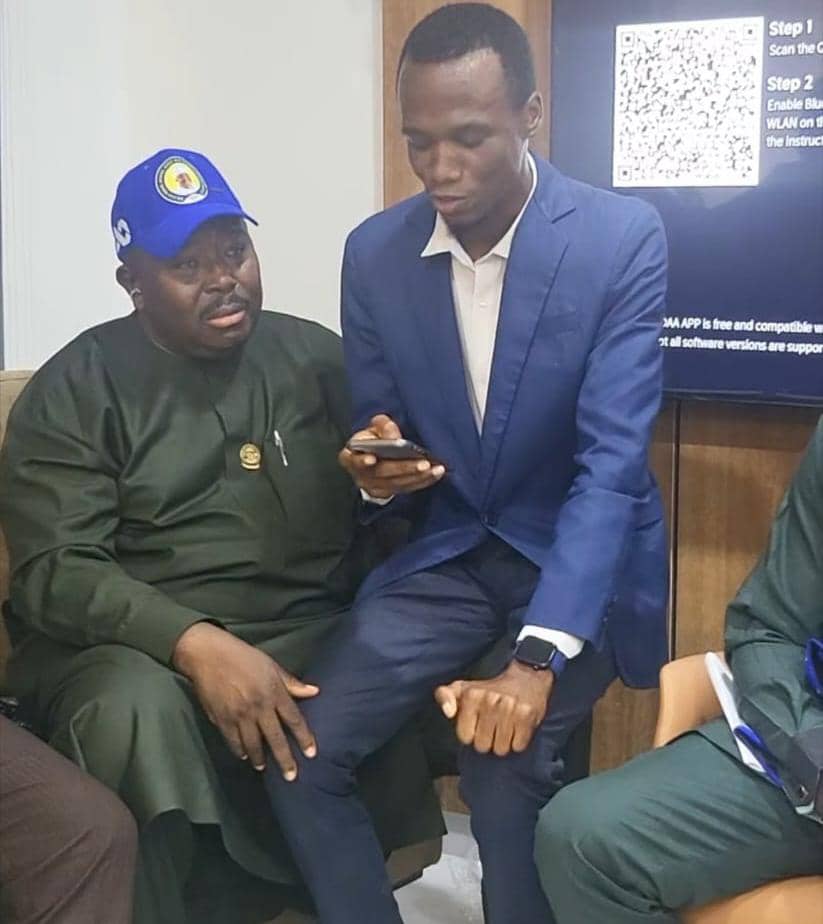
There’s no need to sexualise the trending video involving Senator Sharafadeen Alli or to throw around unproven allegations against anyone. But even leaving out any sexual reading, the incident still raises a fair question about judgement.
According to Senator Alli’s campaign, the young man sat on his lap because there weren’t enough chairs in the office. Honestly, I think that explanation makes things harder to understand, not easier.












So there was no chair, and the next reasonable option was for an adult visitor to sit on the lap of a sitting senator and governorship candidate? Could nobody have stood for a few minutes, found another chair, or had the interview moved or delayed until something more appropriate could be arranged?
These aren’t complicated questions, and asking them doesn’t require accusing Senator Alli or the young man of anything. Something can be entirely innocent and still be inappropriate — that’s really where judgement comes in.

Leadership tends to show itself in the small, unscripted moments rather than the rehearsed ones. Anyone can look composed behind a podium with a written speech, or in front of a camera after being briefed on what to say.
What’s harder to fake is
judgement: the ability to size up a situation with no script and know instantly what’s appropriate and what isn’t, and to understand that the higher you climb in public life, the less you can afford to act as though your choices only exist in private.
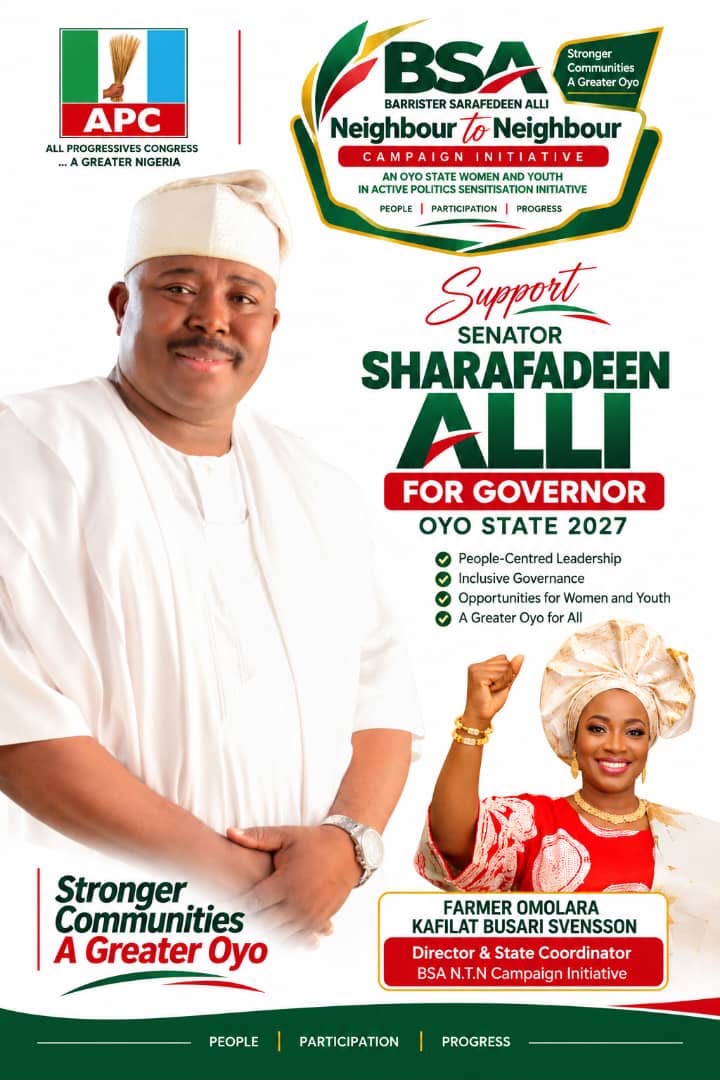
Senator Alli, of all people, should understand this. He isn’t new to politics — he’s held important positions in Oyo State and currently represents Oyo South in the Senate, and now he wants to be governor. That raises the bar for how his conduct should be judged.
Asking the people of Oyo State to hand him the highest office in the state is asking them
to trust his judgement, and judgement isn’t something that only matters in budget meetings or appointments — it shows up in the small decisions too, the ones nobody prepared him for.
One awkward video obviously doesn’t tell us everything about Senator Alli, and nobody should pretend it does. But I don’t buy the argument that because Oyo State has bigger problems, people should just look away from what they saw.
Both things can be true at once: we can have serious conversations about the state’s future and still look closely at the people asking to run it. That’s really what an election is for.
Senator Alli is asking voters to weigh him against whoever eventually emerges from Governor Seyi Makinde’s camp, and that comparison can’t be limited to manifestos and campaign promises. Records, experience, temperament and judgement all matter.
Makinde himself has spent nearly eight years having almost every decision picked apart — his infrastructure choices, his political calls, his appointments, his policies, sometimes quite aggressively.
That comes with the job, and whoever wants to succeed him shouldn’t expect anything different. If Senator Alli wants to be governor, questions about his judgement aren’t “political blackmail” — they’re simply part of working out whether he’s fit for the office.
Which brings me to the part of this I find more troubling than the video itself: the campaign’s response. Calling the controversy political blackmail and pointing to a shortage of chairs doesn’t actually answer the question that matters — was the arrangement appropriate? That’s it.
It doesn’t need a lengthy defence, it doesn’t need accusations of desperation aimed at critics, and it certainly doesn’t need pretending that people who found the whole thing strange are being unreasonable. The more sensible response would have been to admit the obvious — that there was no bad intention, but it should have been handled differently — and move on.
There’s a habit in Nigerian politics of treating any admission of error as weakness. The moment a politician is criticised, supporters go into defence mode: every action gets explained away, every mistake somehow becomes the opposition’s fault, and even explanations that are harder to believe than the original error get defended to the hilt. I don’t think leadership has to work that way. Sometimes you get something wrong, and you say so. If anything, being able to recognise an error and correct it should count in a leader’s favour, not against him.
A governor makes far more consequential decisions than where someone sits during an interview — decisions affecting millions of people, involving billions of naira, with consequences that last for years. No governor gets every one of those right. What matters is whether the person has the judgement to notice when something’s gone wrong, and the humility to fix it.
That’s why I think the campaign made something fairly simple unnecessarily complicated. Nobody needed to accuse Senator Alli of anything sinister, and nobody needed to sexualise the video — the question was always straightforward: was this
appropriate conduct for a sitting senator who wants to be governor of Oyo State? In my opinion, no, and there’s nothing outrageous about saying so.
Political campaigns can’t demand scrutiny of the incumbent government while declaring their own candidate off-limits. If Governor Makinde’s decisions can be examined, questioned and criticised — and they should be — then the same standard has to apply to anyone asking Oyo State to hand them the keys to Agodi Government House. That scrutiny won’t always be comfortable, and it isn’t supposed to be.
None of this calls for insults, rumours or innuendo.
It doesn’t call for switching off common sense either. This comes down to judgment, and so far, neither what happened nor the explanation that followed has done much to reassure anyone.
Source: The Cable