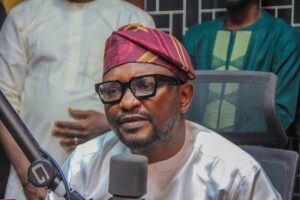
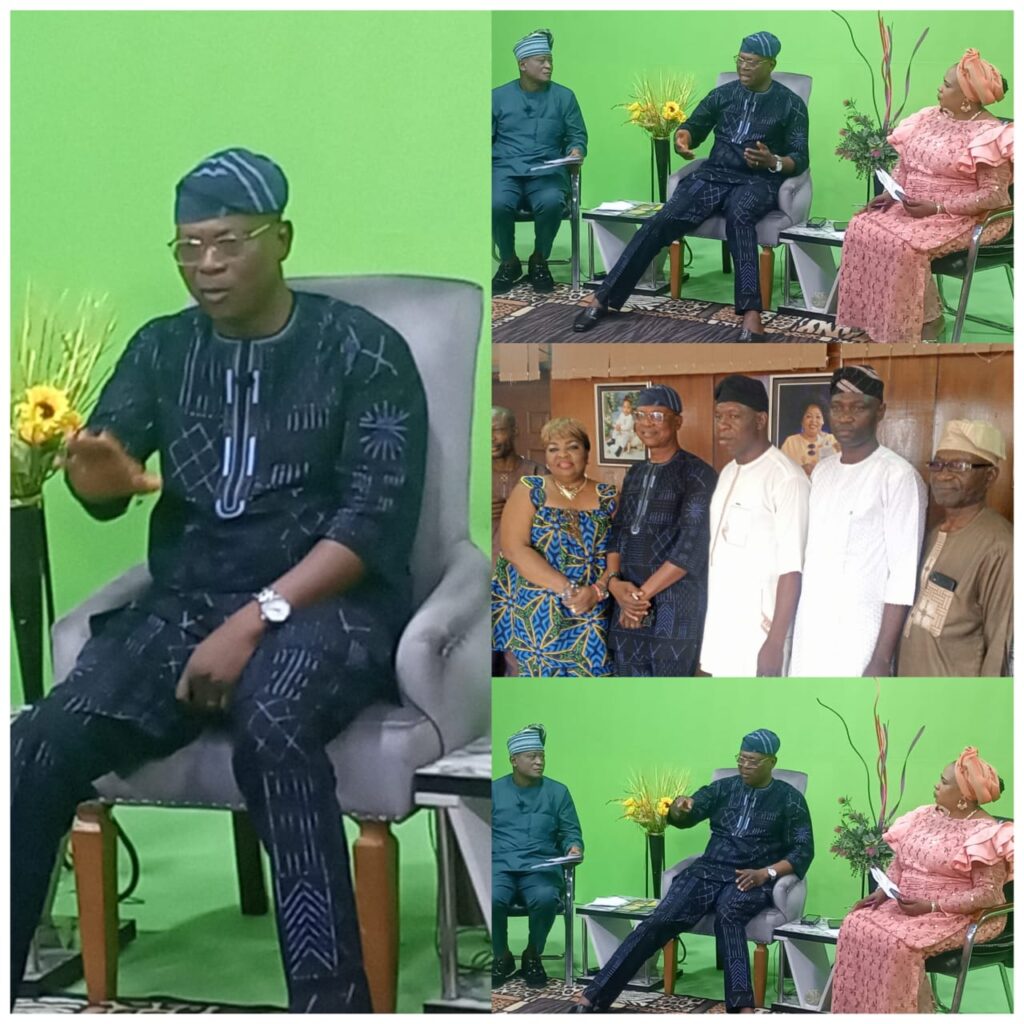

The Chief Whip of the Oyo State House of Assembly, Hon. Gbenga Joseph Oyekola, has offered an in-depth perspective on legislative responsibilities, democratic values, and governance during a live television interview on BCOS programme, “Gbagede Oselu.”

The widely viewed programme, held at Ile Akede, Orita Bashorun, Ibadan, was simultaneously broadcast on Oluyole FM, Ajilete FM, Oke-Ogun FM, Gotv, and StarTimes, drawing significant public engagement.

Oyekola, who represents Atiba State Constituency, began the session by extending Eid al-Fitr greetings to Governor Seyi Makinde, members of the 10th Oyo Assembly, and his constituents, emphasizing unity and shared prosperity.
Speaking on the Nigerian Constitution and legislative duties, he underscored that lawmakers are primarily elected to make laws that improve the lives of citizens while ensuring accountability in governance.
He stressed that constituents also possess significant power, noting that elected representatives remain accountable to the people who voted them into office.
Drawing from his background as a former class teacher, Oyekola addressed the Federal Government’s policy on years of service, advocating for an extension of tenure for primary school teachers.
He argued that experienced teachers remain invaluable assets, adding that retaining them longer would enhance mentorship and strengthen the education sector.
On his motivation for venturing into politics, the lawmaker explained that his desire to promote godly leadership and moral governance inspired his political journey.
According to him, individuals with a strong sense of faith and integrity are better positioned to deliver democratic dividends and promote equity in society.
Reflecting on his experience working under past governors including Lam Adesina, the late Adebayo Alao-Akala’s contemporaries, and the late Abiola Ajimobi, Oyekola said each administration contributed uniquely to the state’s development.
However, he expressed strong confidence in Governor Seyi Makinde’s leadership, describing him as a promise keeper whose governance style inspires trust and commitment.
On the new Electoral Act, Oyekola emphasized the importance of transparency and adherence to the law, noting that Nigeria must improve its electoral processes to match global best practices.
He pointed out that voting procedures in advanced democracies are seamless, urging reforms that would make participation easier for Nigerian voters.
Addressing political party dynamics, he noted that the law recognizes direct primaries or consensus arrangements, urging stakeholders to align with evolving democratic processes.
Oyekola acknowledged that internal crises are common in political parties, including the Peoples Democratic Party (PDP), but maintained that such issues are manageable.
He expressed optimism that the PDP would resolve its internal challenges and remain a formidable force ahead of future elections, including 2027.
The Chief Whip also dismissed fears of Nigeria drifting into a one-party state, insisting that democratic plurality must be preserved for national stability.
Comparing past administrations with the current government, he said Makinde’s policies are people-oriented and reflective of the aspirations of Oyo residents.
He noted that visible infrastructural development across the state has strengthened public confidence in Governor Makinde’s governance.
On legislative independence, Oyekola rejected claims that the Oyo Assembly operates as a rubber stamp, insisting that lawmakers critically evaluate policies before approval.
He emphasized that democracy thrives on checks and balances, which the Assembly continues to uphold through its oversight functions.
Discussing constituency projects, the lawmaker identified budget scrutiny as the foremost responsibility, ensuring equitable allocation across wards and sectors such as health, education, agribusiness, economy, and security.
He listed several motions he has sponsored, including calls for a bus terminal in Oyo, road infrastructure improvements, and the establishment of a LAUTECH Teaching Hospital annex in the constituency.
Oyekola also highlighted ongoing initiatives such as the construction of Atiba FM and the promotion of literary and debate activities in secondary schools.
On local government administration, he stressed the importance of grassroots governance, describing it as the closest tier of government to the people.
He reaffirmed support for local government autonomy, while noting that constitutional provisions still require oversight and approval from state assemblies.
Addressing security concerns raised by callers, Oyekola admitted that eliminating terrorism may be difficult but stressed the need for strengthened security architecture and intelligence gathering.
He urged citizens to remain vigilant and cooperate with authorities by reporting suspicious activities promptly.
On Nigeria’s oil-dependent economy, he advocated a return to agriculture, describing farming as a sustainable path to economic stability.
He lamented the neglect of the agricultural sector, despite its historical significance in national development.
The lawmaker pointed to initiatives under the current administration, including tractorization, free seedlings, and improved access to agricultural loans, as steps toward revitalizing farming.
He also identified challenges such as insecurity and herder-farmer conflicts as major setbacks to agricultural productivity.
Speaking on youth empowerment, Oyekola called for strategic interventions, including the revitalization of technical institutions to equip young people with practical skills.
He stressed that empowerment programmes must be sustainable and tailored to prevent misuse of resources.
On budget monitoring, he explained that the Assembly conducts oversight through committees that inspect projects and evaluate government performance.
He added that lawmakers also have the authority to scrutinize local government activities to ensure accountability at all levels.
Looking ahead, Oyekola stated that his political future rests with his constituents, reaffirming his commitment to serving their interests diligently.
He concluded by highlighting his consistent attendance and active participation in legislative duties, noting his roles in key committees and leadership as Chief Whip.
The interview offered a comprehensive insight into Oyekola’s legislative philosophy, governance priorities, and vision for a more accountable and people-driven democracy in Oyo State.
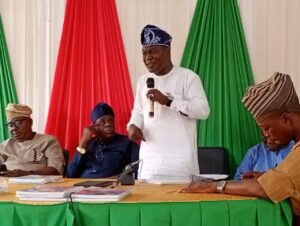
In the entourage of the lawmaker are; the Executive Chairman of Atiba local government, Hon. Wahab Waliu Adetunji WABKEM, the Vice Chairman/Soro Political Head, Hon. Badmus Ismail Olaide, Leader of the House Atiba LG Legislative, Hon. Ademola Kayode Adeniyi, Deputy Leader, Hon. Okunlola Abiola Ige, Atiba PDP Party Chairman, Mr. Adejare Ayinde, Atiba PDP Women Leader, Mrs. Rasheed Sarat, Youth Leader, Mr. Oluwatunde Stephen, Chief of Staff, Hon. Babalola Saheed, Super for Women Affairs, Mrs. Oriade Aminat, Super for Youth and Sport, Hon. Bolaji Johnson, Atiba PDP Chairman of Chairmen Mr. Gbenga Oladejo, Super for Information, Hon. Akinola Quadri, Atiba PDP Publicity Secretary Hon. Bolatito Ismail, Mr. Ashiru Kazeem, Mr. Ogunjimi Joseph and Rasheed Opeyemi (Media Aide to the lawmaker) respectively.